
The Wind Never Showed Up. The Lessons Did.
When you think of Cabrillo Beach, you think wind.
The kind of wind that leaves your hands sore, your legs burning, and your face salty after a long day of hiking an ILCA around the course. Instead, this year's ILCA North American Championship delivered something entirely different.
Four days of racing. Seven races completed. Hours spent drifting under postponement in just 4–7 knots of breeze. It wasn't the championship anyone expected.
But sailing has a funny way of reminding us that championships aren't about getting the conditions you trained for. They're about adapting to the conditions you get. For me, this regatta became about much more than light-air racing. It became a reminder of what kind of sailor—and what kind of community—I want this sport to be.
The Best of Sailing
Before racing even began, one competitor arrived Thursday morning to discover that her boat had been stolen from the beach overnight. Imagine showing up to a championship ready to race, only to discover your regatta might be over before it even begins.
Except... it wasn't. Within minutes, sailors and coaches from multiple teams were pulling together spare parts, making phone calls, and figuring out how to get her on the water. Without hesitation, my coach Christian looked at the situation and simply said, "We have a spare hull. Let's get her rigged."
No debate. No hesitation. Just people helping another sailor compete. That's the version of our sport I hope never changes.
At every level of sailing, we're competitors. But we're also custodians of this community. Sometimes that means lending a control line. Sometimes it's helping someone launch. Sometimes it's offering the very equipment your own team could have kept as a backup.
Those moments matter.
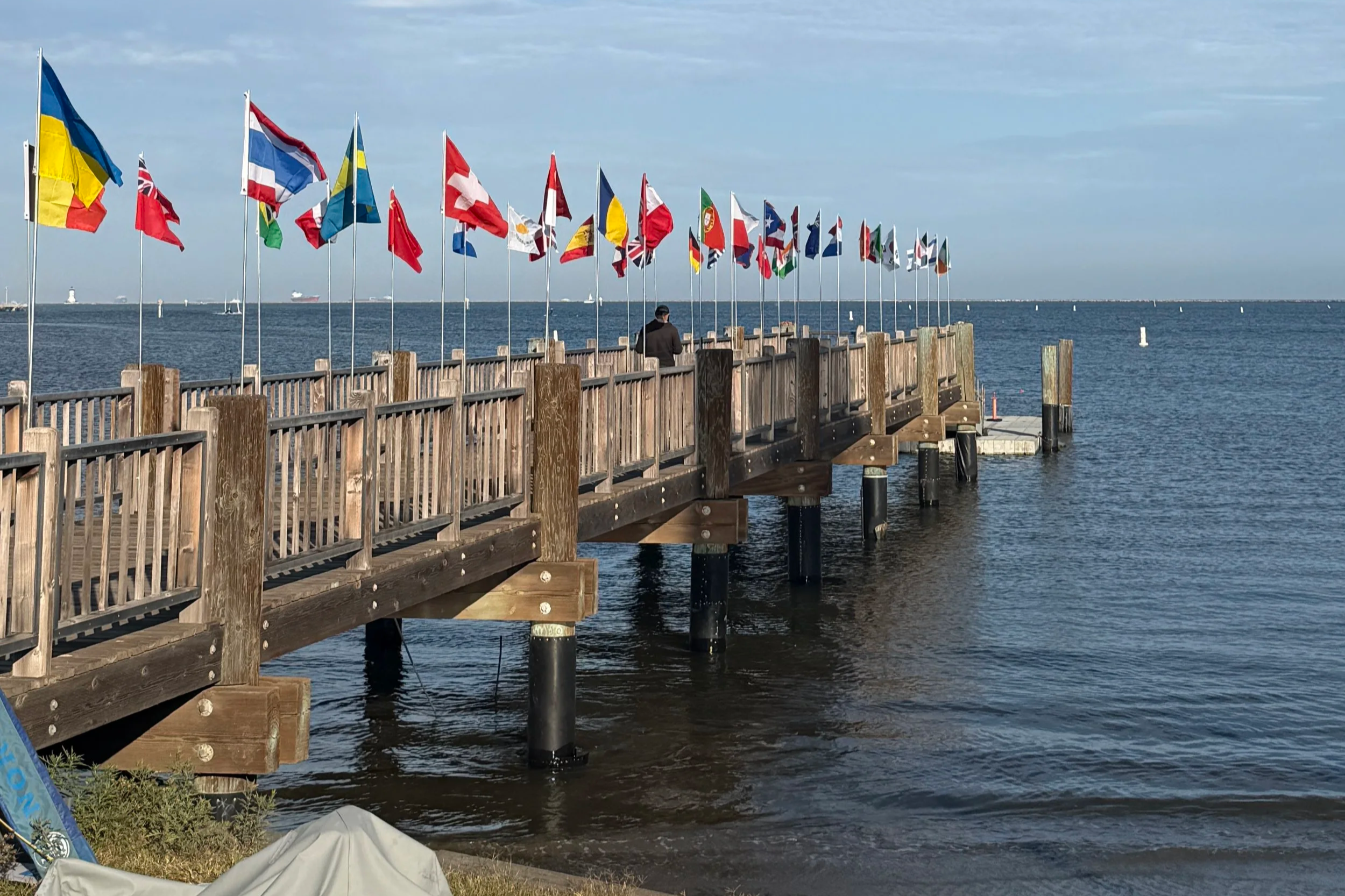
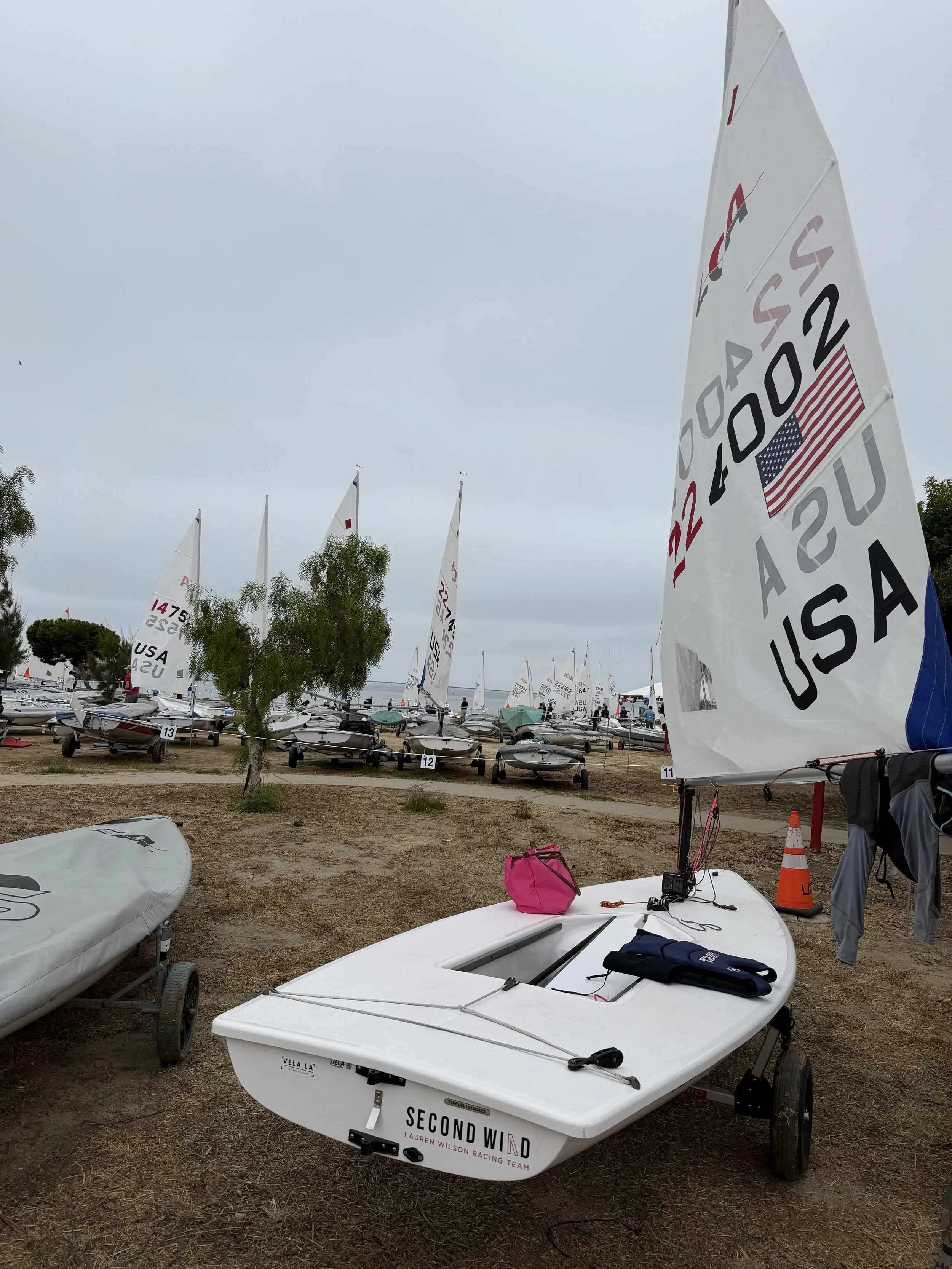
The view from the olympic venue, where medals will be decided in 2 years time.
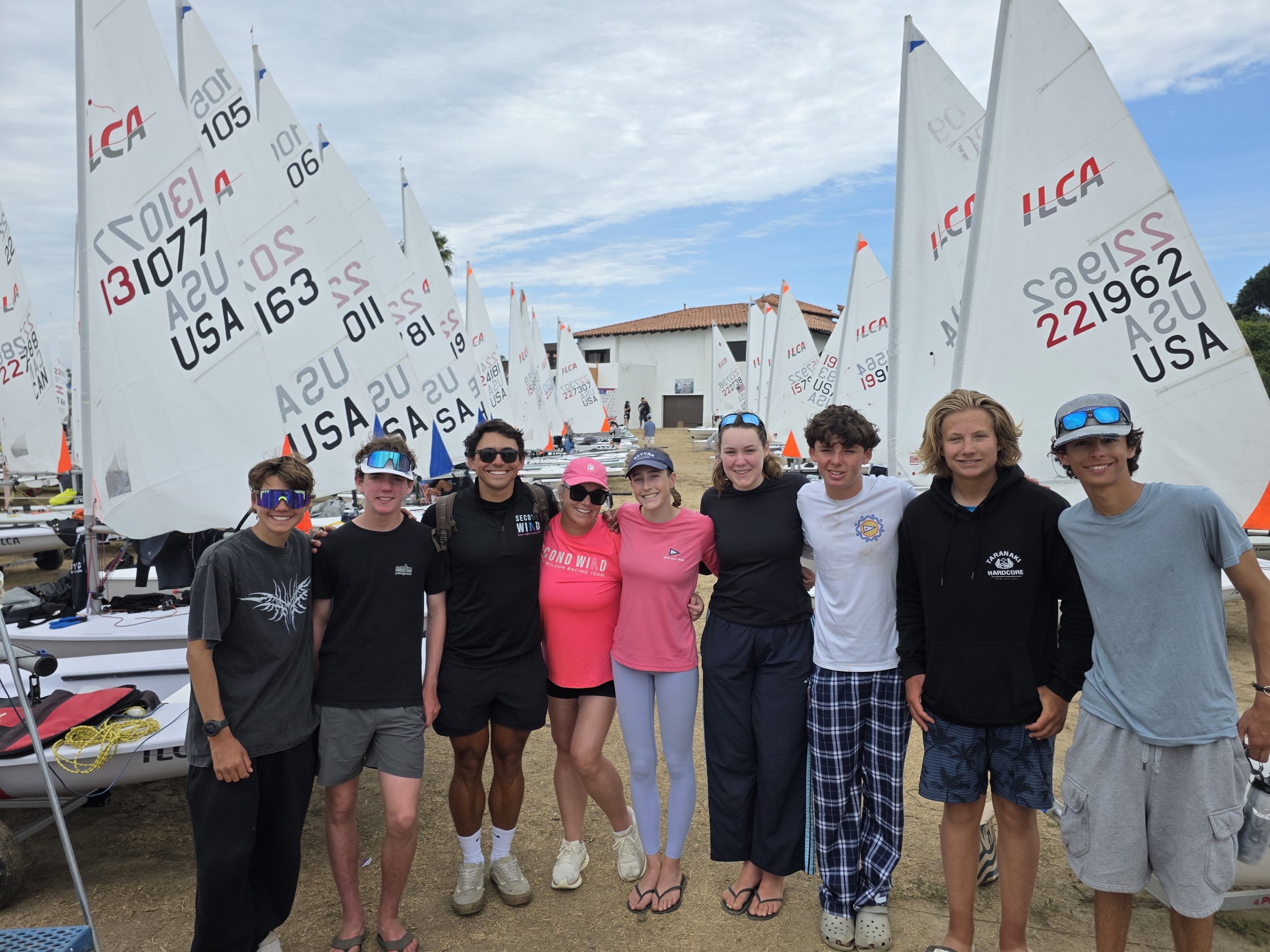
The “Summit Sailing Squad” from Deer Creek Yacht Club, the awesome team that has adopted a few San Diego sailors for our travel regattas… more on this awesome crew later.
...And the Worst
Unfortunately, we also saw the opposite. Light-air racing has a way of magnifying everything. Tiny shifts become race-defining decisions. Small overlaps become heated situations. Every inch matters. This week, there were more incidents than I've experienced at most regattas.
Aggressive kinetics. Unnecessary contact. And too many situations where sailors who clearly broke a rule chose not to take a penalty, effectively forcing competitors to decide whether the incident was worth taking to the protest room.
I found myself on the receiving end of one of those situations after another competitor fouled me, made contact with my boat, and continued racing without taking a penalty. The protest committee ultimately found in my favor. But honestly, that isn't something I consider a victory. I'd much rather settle things on the racecourse than spend my evening in a protest hearing.
The Racing Rules of Sailing exist because they allow us to compete hard while respecting one another. They're part of the social contract we all agree to when we launch our boats. When we break a rule, taking a penalty isn't weakness–it's integrity.
Because regardless of who an incident is with, there's a good chance we'll race each other again. And again. And again. Hopefully for decades.
Very few people will remember where any of us finished at this regatta a year from now. Even fewer will remember five years from now. But they will remember what it felt like to line up next to you. They'll remember whether you raced hard and raced fairly. Whether you owned your mistakes. Whether you treated competitors with respect. Whether your word meant something. Results become lines in a score sheet. Your reputation becomes part of your legacy in this sport.
If I have to choose between being remembered for one great finish or being respected by the people I'll spend the next few decades racing against, I'll choose the latter every single time.
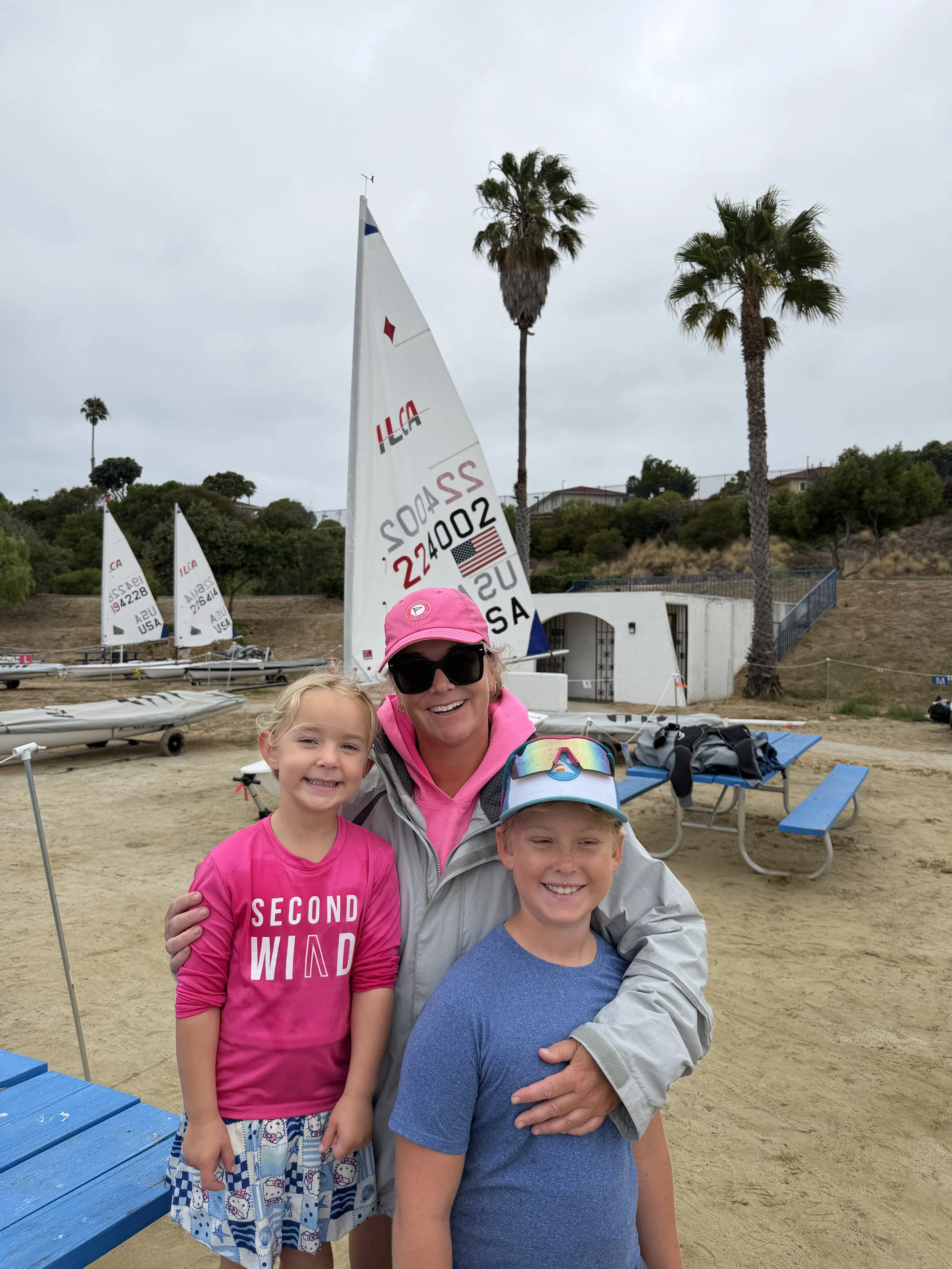
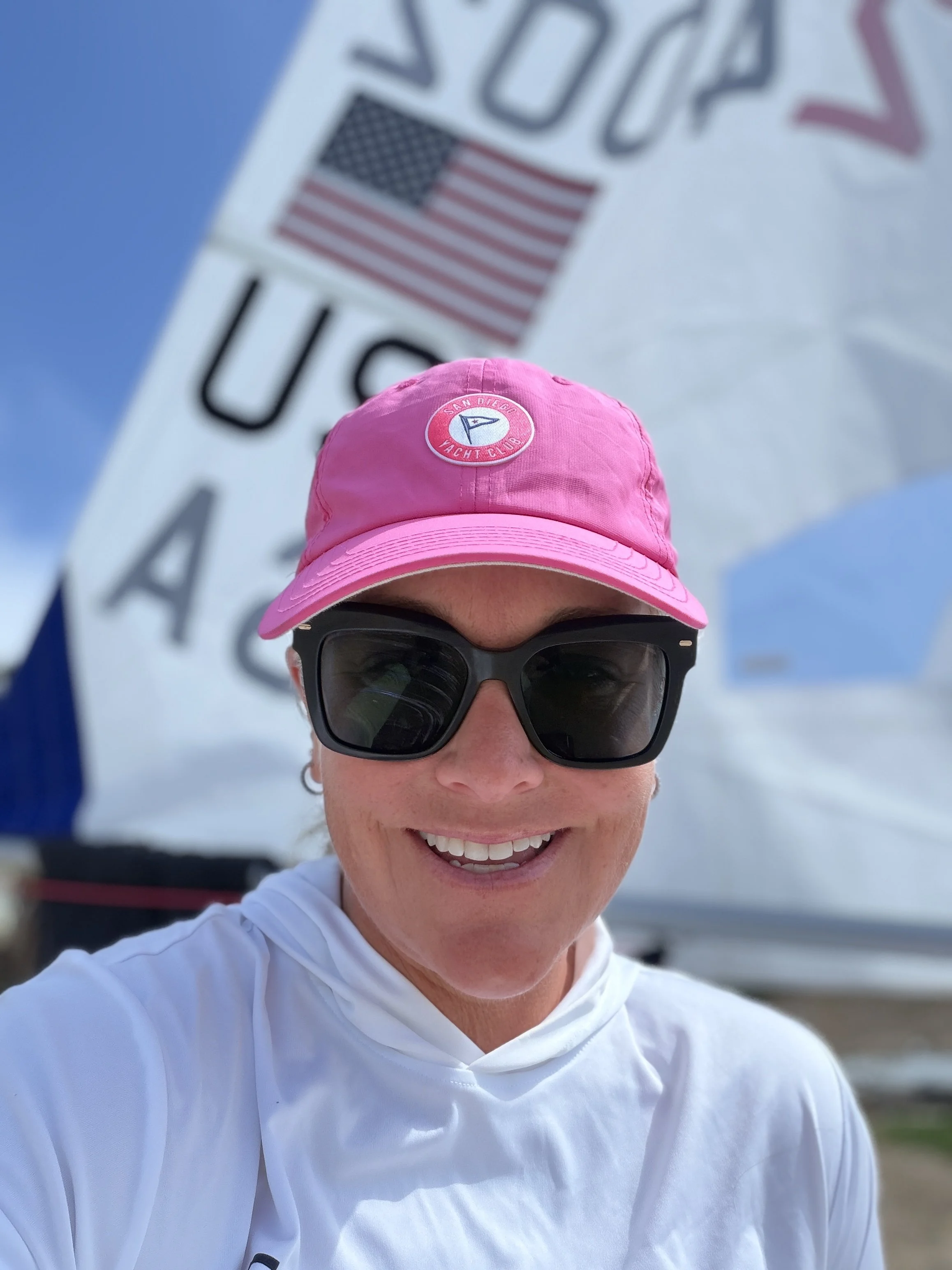
My Regatta
This year's North American Championship carried a little more weight than most. With racing taking place off San Pedro—the host venue for the sailing events at the Los Angeles 2028 Olympic Games—this regatta, together with next week's Sailing Grand Slam, has become an unofficial opportunity for many of the world's top sailors to gain valuable experience on the future Olympic racecourse.
The result was one of the deepest ILCA 6 fleets I've ever raced. Olympians. World champions. National team athletes. Women who will almost certainly be on the starting line in 2028.
That context matters. Because while everyone looks at the final scoreboard, I also pay attention to something else: who I'm racing around and whether the gap continues to shrink.
Light air has never been my strongest condition, and this championship certainly exposed that. A missed shift here. A bad lane there. In these conditions, small mistakes become expensive. But there were also races I'm genuinely proud of. In one race, I finished ahead of the current world No. 1. In several others, I found myself racing boat-for-boat with sailors I admired from afar just a year ago.
Those moments don't mean I've arrived. They mean the work is working. The challenge now isn't finding flashes of speed. It's learning how to string them together over an entire championship.
That's why I compare myself against many of the same competitors from event to event rather than focusing solely on finishing position. Different venues and conditions change the scoreboard. Progress is measured by something deeper. The gap is getting smaller. And that's encouraging.
Because this journey has never been about one regatta. It's about becoming the sailor I'll need to be when it matters most.
The Bigger Picture
When I restarted this Olympic-class journey, I knew it wouldn't be linear. Some regattas would feel like breakthroughs. Others would expose exactly what still needed work. This championship gave me plenty of both. The scoreboard tells one story. The lessons tell another.
I'll remember the sailor who was given another chance after losing her boat. I'll remember coaches who immediately stepped up to help a competitor. I'll remember competitors who upheld the rules, even when it cost them. And I'll remember that integrity is just as important as speed.
Championships come and go. The culture we create for our sport lasts much longer. I hope we continue choosing the version of sailing where we compete fiercely, help generously, own our mistakes, and leave every dock with our reputations just a little stronger than when we arrived.
Looking Ahead
Next up is the Sailing Grand Slam back in San Pedro, followed by the ILCA Women's World Championship in Ireland. There is still so much to learn. So much to improve. And that's exactly why I keep showing up.
Thank you to everyone following this journey, cheering from shore, supporting this campaign, and believing that it's never too late to chase something extraordinary.
I'll see you on the next starting line.
