
100 Degree Heat, 5 Knot Winds, And Almost 1,500 Boats In 21 Different Classes: Kieler Woche Was Incredibly Challenging
Kieler Woche has a reputation for cold temperatures, rain, and big breeze.
This year? We got the exact opposite.
A historic European heat wave settled over northern Germany, bringing temperatures near 100°F and barely enough wind to race. Instead of survival conditions, we spent most of the week waiting—on shore or drifting on the water—hoping the breeze would fill.
For an event that's one of the largest sailing regattas in the world, it was a remarkable reminder that Mother Nature always has the final say.
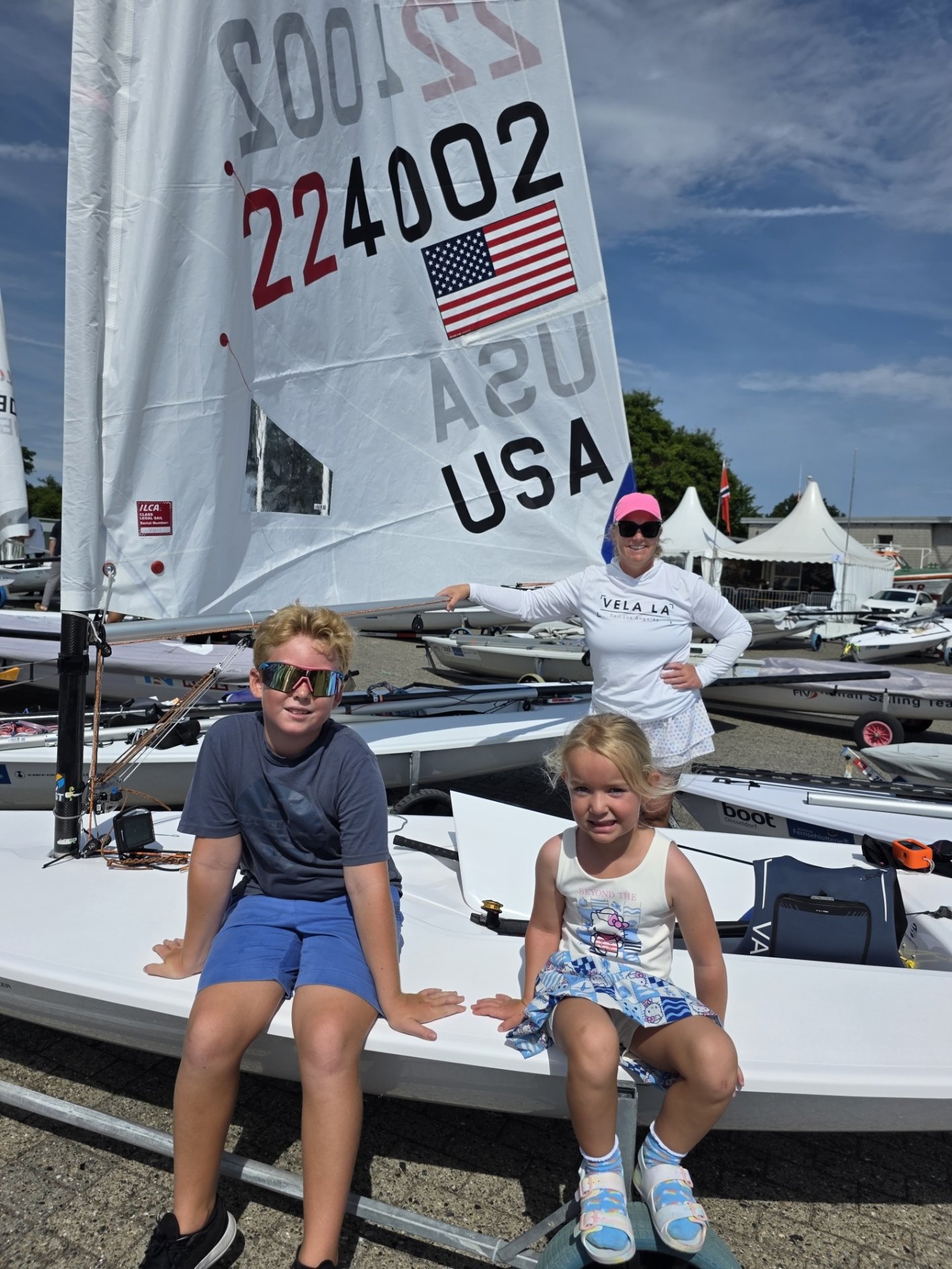
Lauren and the kids during one of many on-shore postponements in Kiel, Germany.
Despite the conditions, Kieler Woche was incredibly well run. Managing nearly 1,500 boats and more than 3,000 competitors across 21 classes without administrative chaos, launch delays, or recovery bottlenecks is an impressive feat. From the volunteers to the race management team, everything on shore and on the water was first class.
If only the wind had shown up.
The Week
Day 1
Nine hours on the water. No racing.
Day 2
Two hours afloat, followed by five hours waiting on shore before we finally got one race underway in barely five knots of breeze. I had a great start that was erased by a general recall. The restart wasn't nearly as clean, and I found myself on the wrong side of the first upwind leg.
Day 3
We managed to complete three races in just 4–5 knots of wind. One race felt like a step forward. The other two reminded me how much there still is to learn.
Day 4
Another long postponement ashore before two more races in ultra-light conditions. I ultimately missed qualifying for the medal race.
Day 5
I headed to the boat park to clean up my charter boat and planned to watch the top ten sailors compete in the medal race. Instead, the breeze topped out around two knots, and racing was abandoned once again.
The Biggest Win
While the results weren't what I was hoping for, the experience absolutely was.
One of my biggest goals this season has been putting myself on starting lines with the strongest women's fleets in the world. Every regatta like this compresses the learning curve in ways that training at home simply can't.
Watching how the top sailors position their boats in almost no wind, how patiently they move through the fleet, and how efficiently they manage every tiny puff was invaluable.
Even more meaningful was the generosity of the sailing community. Multiple sailors and coaches offered advice throughout the week and even gave me tows back to shore when the breeze disappeared. Those small acts of kindness say so much about this sport, and I'm incredibly grateful.
Now it's time to take everything I learned in Kiel and put it to work.
Next stop: the ILCA 6 North American Championships in Los Angeles.
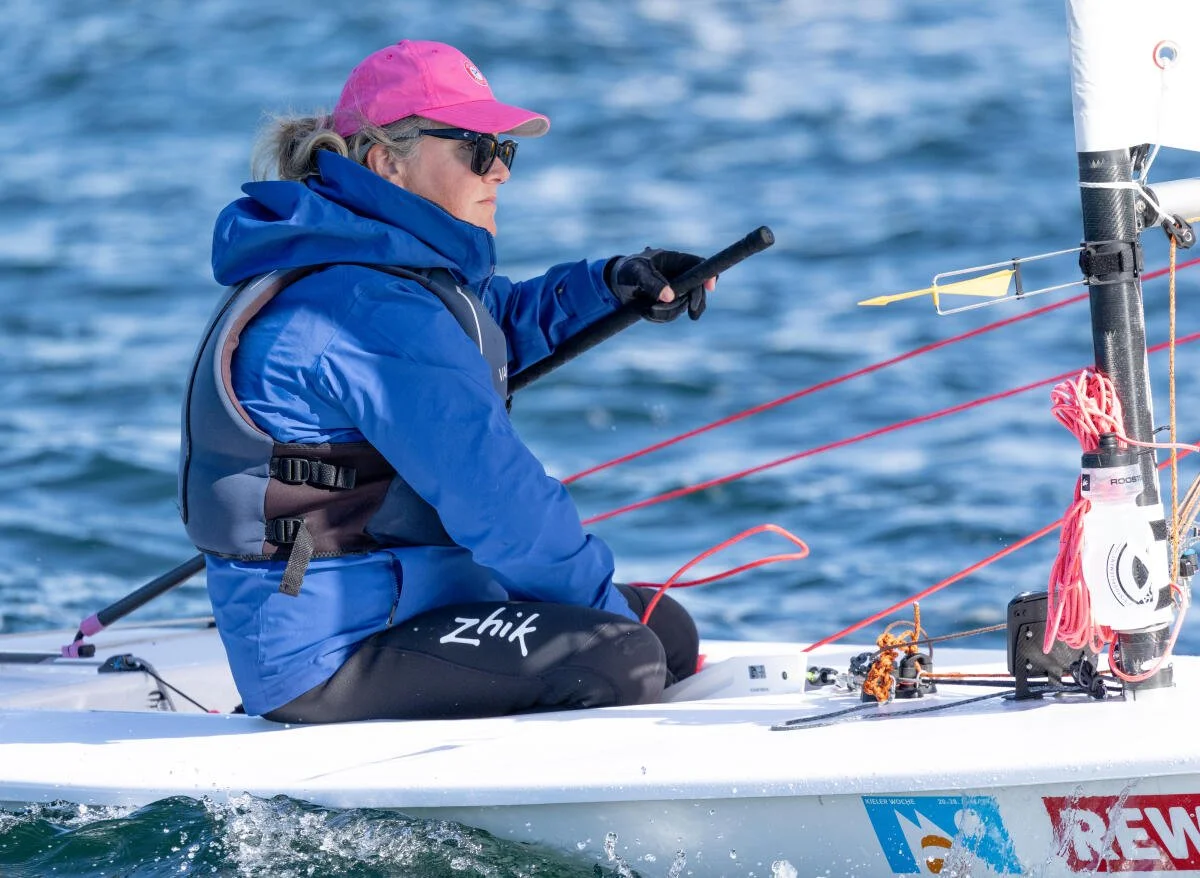
Kieler Woche 2026/Felix Diemer
