
US Nationals in Corpus Christi: Storms, Setbacks, and Staying Resilient
Some regattas are about results. Others are about resilience.
The 2026 ILCA U.S. National Championship in Corpus Christi, Texas, ended up being a little bit of both.
Corpus Christi threw everything at us last weekend — massive storms, brutal heat and humidity, huge pressure shifts, postponements, light-air chop, and long days of uncertainty that tested sailors mentally as much as physically.
All three days started before 9am with boats rigged and ready to launch, and we didn’t get off the water until after 6pm. Hours of waiting, launching, coming ashore, heading back out, staying mentally switched on, and trying to remain physically fresh through constantly changing conditions.
And all of it happened in 87-degree heat with humidity hovering around 88%. By the end of each day, everyone was exhausted.
A Wild Storm and a Long Wait
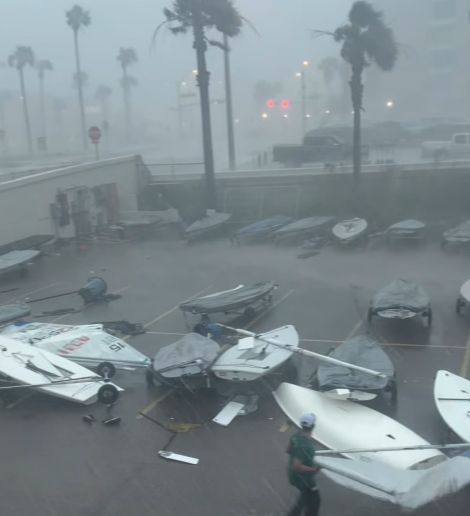
Saturday brought one of the more intense weather days I’ve experienced at a regatta.
We launched in building breeze before race management sent us ashore as a massive storm system moved through Corpus Christi Bay. Once the storm cleared, we headed back out hoping to salvage racing for the day.
But the storm had completely sucked the pressure out of the bay.
Despite waiting and hoping for breeze to return, our fleet ultimately wasn’t able to get a race off.
It was one of those reminders that sailing is a sport completely at the mercy of nature. Sometimes all you can do is stay patient, stay prepared, and adapt.
The Emotional Side of Chasing Big Goals
At one point during the regatta, after another long and emotionally draining day, I ended up crying on FaceTime with my kids from my hotel room.
Not because I wanted to quit.
But because pursuing something this ambitious while also being a mom can feel incredibly heavy sometimes.
I think people often imagine resilience as looking fearless or unshaken. But the reality is usually much less glamorous than that.
Sometimes resilience looks like crying, regrouping, and showing up again the next morning anyway.
That’s part of this journey too.
Learning in Difficult Conditions
Going into the final day, I was sitting 28th overall and feeling reasonably good about where things stood.
Then the conditions shifted completely.
The final day brought ultra-light wind and steep chop — conditions that have never been my strongest. I struggled at times to find rhythm, hold clear air, and break through the pack in large fleet racing.
But instead of spiraling over results, I tried to shift my focus toward growth.
I used the final races to work on big-fleet start strategies in 50+ boat lines, experimenting with positioning, timing, and risk management against an incredibly competitive fleet.
Some of those decisions worked. Some absolutely did not.
But growth rarely happens entirely inside your comfort zone.
Weekends like this expose weaknesses — and honestly, that can be valuable. Those weaknesses become the roadmap for what needs work next.
The Bright Spots Matter Too
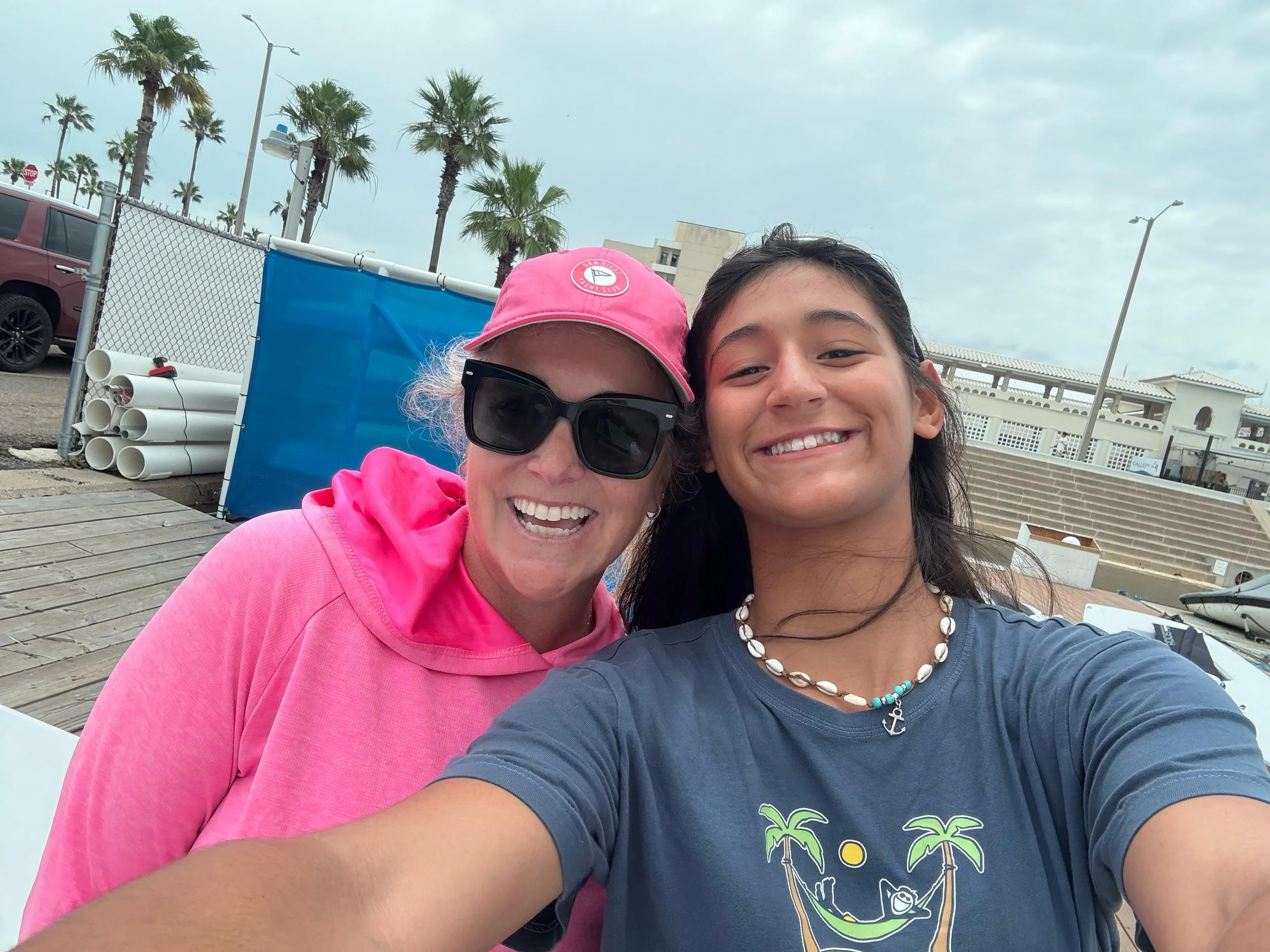
One of the best parts of the weekend had nothing to do with scores. I met an amazing new friend, Nayla, whose positivity and energy were such a refreshing reminder of the kind of culture I want this sport to have more of.
Competitive sailing can sometimes become intensely serious and cutthroat. Nayla brought joy, encouragement, and positivity everywhere she went, and honestly, it was contagious.
That energy mattered this weekend.
Part of the Process
This regatta wasn’t the result I hoped for. But it was still an important part of the process.
Every event teaches something different. Some weekends sharpen confidence. Others expose gaps. Others test endurance, adaptability, patience, or mindset.
This one tested all of the above.
The goal of this campaign has never simply been to collect results on paper. It’s about becoming tougher, smarter, more adaptable, and more capable in every condition — on and off the water.
And sometimes resilience looks less like standing on a podium…
…and more like pulling yourself together and showing up again the next morning.
Beyond Results
I’m committed to continuing to show up, continuing to do my best, and continuing to get just a little bit better every single day.
But I’m also committed to something bigger than results.
Rebuilding the Corinthian Spirit
I want to help rebuild the Corinthian spirit in our sport — spreading joy, positivity, and the belief that you can be intensely competitive while still being kind. I want to race hard, push myself and my competitors to the limit, and still be the person cheering for the sailor next to me once we hit the dock.
I’m committed to helping ALL my competitors.
A true One Design fleet only exists when there are no gatekeepers.
I don’t benefit if I beat someone because their rigging was off and I could have helped them fix it ashore. I want to win because I’m the best when everyone else is also at their best.
That’s the kind of sailor I want to be.
And that’s the kind of culture I want to help build.
#ARisingTideLiftsUsAll
Next Stop: Kiel Week
Now, the focus shifts to the next stop on this year’s race calendar: Kiel Week in Germany — the largest annual sailing regatta in the world.
Last year, more than 2,000 boats competed across the Olympic classes, ORC fleets, and one-design classes, with over 400,000 spectators attending throughout the event.
I’m training hard and incredibly excited for the opportunity to compete on one of sailing’s biggest stages. And with any luck, this will be the last regatta I compete in without on-the-water coaching support.
Why Coaching Matters
Right now, coaching remains the single biggest performance gap in my campaign.
At this level, coaching provides critical advantages: real-time feedback, weather and tactical insight, performance debriefs, and even something as simple as a tow to the race course that helps conserve physical energy before racing begins.
Coach fees typically range from $300–$800 per day, in addition to travel, lodging, and coach boat charter expenses.
How You Can Help
If you’d like to help support this campaign, every contribution matters — whether it’s $5, $10, or $1,000.
Thank you for helping fuel this Second Wind.
