
Finally, There Was Wind! The Final Edition of the Sailing Grand Slam in San Pedro Delivered Olympic-Level Competition.
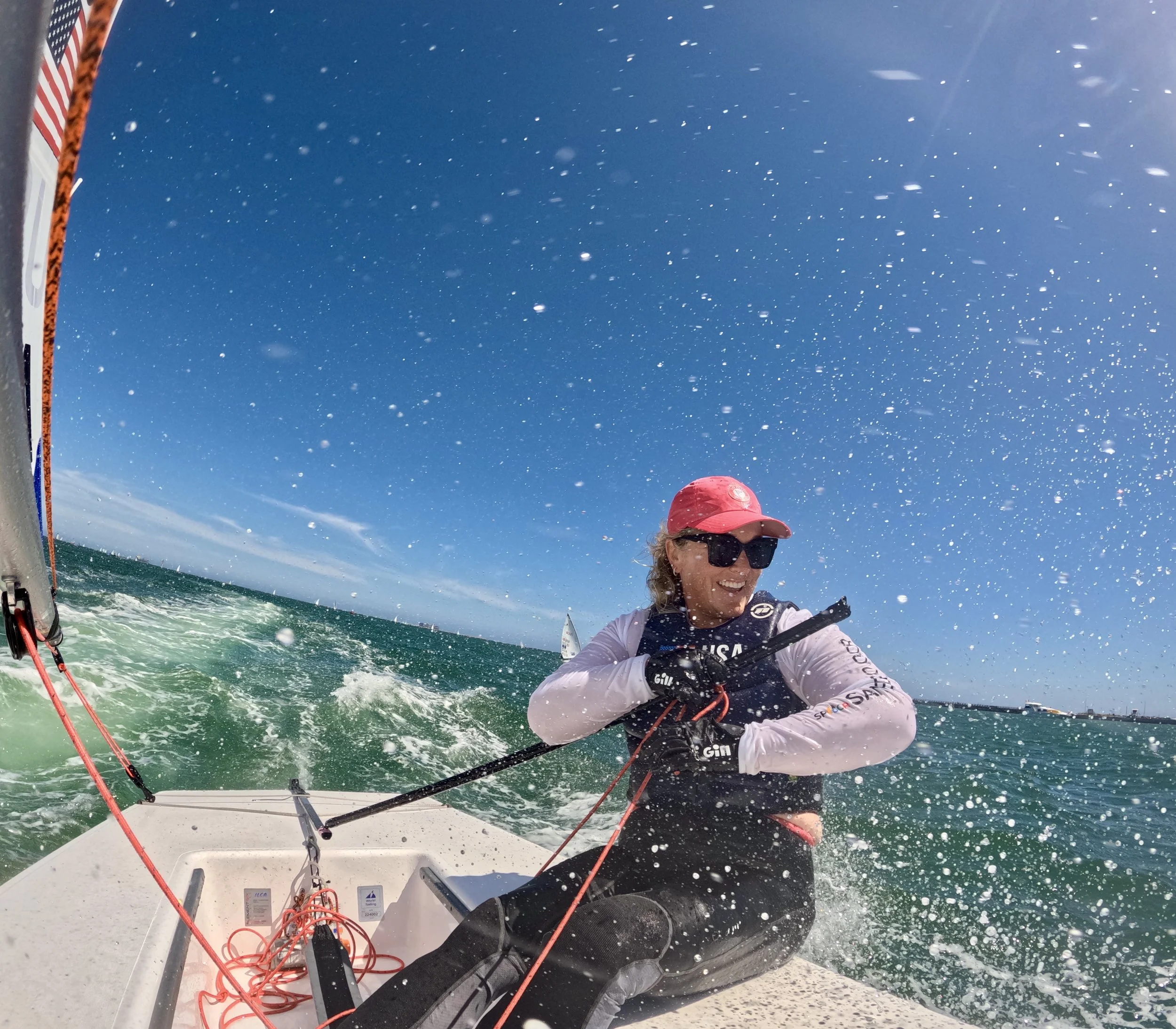
Finally some breeze—and spray—in my face
5 of the 6 days of racing saw conditions of 16-24kts.
For what felt like the first time all summer, we actually got to race in the conditions everyone had been waiting for.
The fifth and final stop of the Sailing Grand Slam returned to the Olympic waters off San Pedro, California, and it delivered exactly what the venue is known for: breeze. After weeks of postponements, drifting races, and light-air frustration, this regatta brought true championship conditions. It also brought one of the deepest fleets I’ve ever raced against.
Elite Competition
More than 300 sailors from 47 countries lined up on the same racecourse, including 70 Olympians, 19 Olympic medalists, and many of the fastest women in the world. In the ILCA 6 fleet alone, every sailor ranked inside the world’s top 25—and 46 of the world’s top 90—was on the starting line.
This wasn’t just another regatta. It was about as close as you can get to Olympic competition without the five rings.
And somehow, at 42 years old, as a mom of two chasing an Olympic dream, I had earned my place on that same starting line.
The Results Don’t Tell the Whole Story
If you only looked at the final standings, you’d think this was one of my toughest regattas of the season.
You’d also miss one of the most encouraging weeks I’ve had.
Qualifying was sailed in exactly the kind of conditions that have challenged me all year: light breeze and steep, confused chop. By the time the wind finally filled in, the fleet had already been split into Gold and Silver. My qualifying scores left me deep in Silver Fleet, and I ultimately finished 61st overall.
I’m not hiding from that result.
But I’m also not letting a single number define what I learned.
The Flashes Are Getting Longer
One of my favorite moments came early in the regatta.
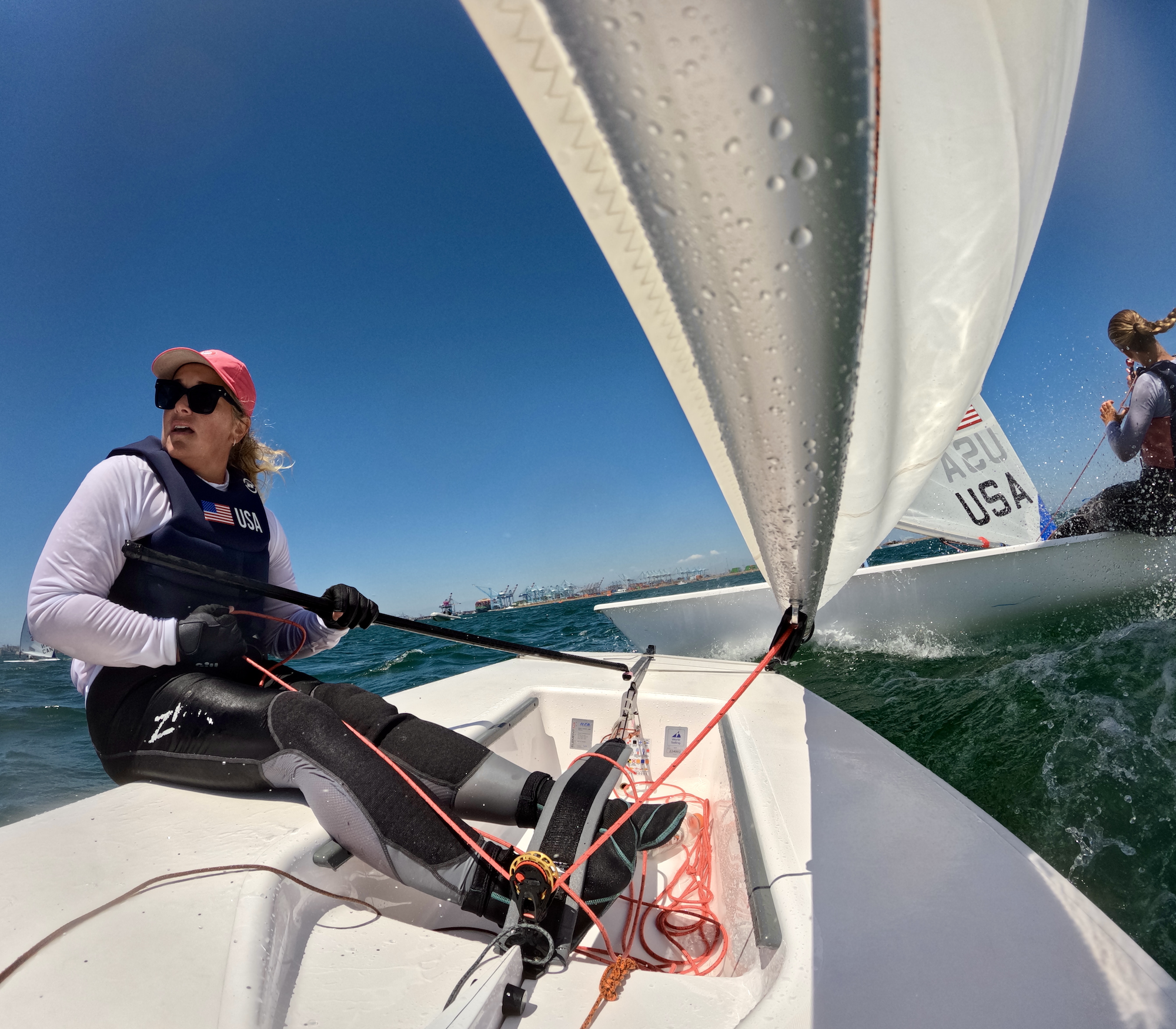
At one point, I found myself ahead of Charlotte Rose, the current world No. 1. It didn’t stay that way. The world’s best sailors have an incredible ability to claw back boats over the course of a race. That’s why they’re the best. But for a brief stretch, I wasn’t watching the leaders disappear over the horizon. I was racing with them. Those moments matter. They’re reminders that the gap isn’t that I can never get there. The gap is sustaining that level of performance for an entire race—and then an entire regatta.
Another highlight came once the breeze arrived. After struggling through qualifying, I put together a 3rd-place finish in one of the Silver Fleet races, along with several solid mid-fleet finishes. The overall standings won’t show that progression. But I felt it.
A Pattern Is Emerging
When I look back over the past two months—from Kiel Week in Germany, to North Americans, to the Sailing Grand Slam—I see a pattern. The flashes are getting longer.
Earlier in this campaign, success looked like one good start. Then it became one good beat. Then one competitive race.
Now I’m finding myself in positions where I’m mixing it up with sailors I’ve watched compete on the world stage. That’s progress. Not because I’m satisfied with where I finished. Because those moments are happening more often.
What Comes Next
The encouraging part is that I know exactly where the work still is.
Light-air speed.
Finding lanes in crowded fleets.
Connecting good moments into complete races instead of isolated legs.
Those aren’t mysteries anymore. They’re simply the next steps.
There’s one other piece of this story that I haven’t talked much about. If you’ve been following along on social media, you know I’ve been battling a knee injury since Midwinters East back in February. After North Americans, it reached a point where I seriously considered withdrawing from the Sailing Grand Slam altogether. But after everything this event represented—the training, the travel, the expense, and the opportunity to race one of the strongest fleets in the world—I knew I’d regret wondering, What if?
So I made the decision to race. Not at full strength. Not at full capacity. But with the goal of learning everything I could.
Now that the regatta is behind me, it’s time to shift gears. Over the next few weeks, my focus is on physical therapy, Pilates, and rebuilding the strength and stability my knee needs before the ILCA 6 Women’s World Championship.
I’m not interested in pretending the injury doesn’t exist. I’m even less interested in using it to explain away results. It’s simply another challenge to solve—one more piece of the puzzle in a campaign that’s never been about finding the easy path.
Because every time I line up against the best sailors in the world, I leave knowing a little more about what it will take to get there myselfAnd that’s a trade I’ll make every single time.
A year ago, I never would have imagined lining up against this field. Now I’m disappointed when I don’t race closer to them. That’s a completely different mindset.
And maybe that’s the biggest takeaway from San Pedro. The goal is no longer to prove that I belong on the same starting line. The goal is to stay with them longer. Then beat them. One race at a time.
Competing internationally requires travel, coaching, equipment, entry fees, and an incredible amount of logistical support.
Every donation helps me continue pursuing this dream and representing my clubs, community, and country on the international stage.
All donations are 100% tax-deductible and managed securely through the Skiff Sailing Foundation, a registered 501(c)(3) nonprofit supporting U.S. Olympic hopefuls and elite sailing campaigns.
